Dental SEO Guide
Dental SEO in 2026: What Actually Matters
A practical guide for clinics navigating AI search, patient intent, and local trust.
Introduction
SEO is evolving, and for dental clinics, the old playbook is starting to show its age. Keyword-stuffed service pages, generic blog posts, and a handful of backlinks used to be enough to rank. Not anymore. In 2026, search engines and the AI tools sitting on top of them are getting better at understanding intent, trust, and real-world relevance. That changes what clinics need to prioritize to get found by patients who are actually ready to book.
This post breaks down what is actually moving the needle for dental SEO this year, and what is quietly becoming a waste of time.
Why Traditional SEO Alone No Longer Works
Search behavior has changed
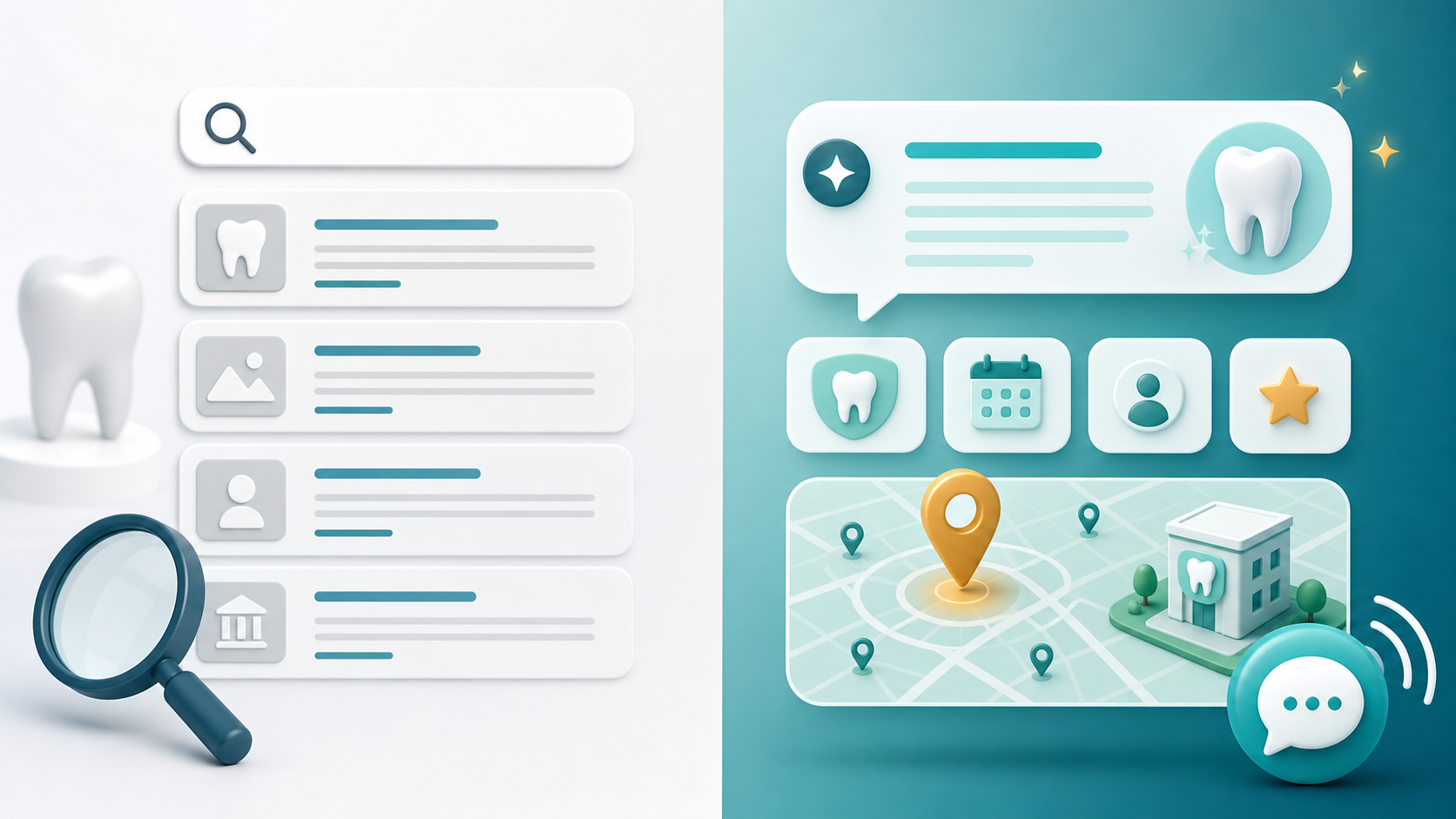
Patients do not search the way they did five years ago. Instead of typing "dentist near me" and scrolling through ten blue links, more people are:
- Asking conversational questions, such as "what is the best option for a missing molar that will not break the bank?"
- Getting answers directly from AI-powered search summaries before ever clicking a website.
- Cross-checking clinics on Google Maps, Instagram, and review platforms before landing on a website at all.
This means visibility is not just about ranking on page one anymore. It is about being the answer a search engine or AI assistant chooses to surface, and being trustworthy enough that a patient clicks through and books.
Clinics still relying on generic, thin service pages like "We offer teeth whitening. Contact us today!" are increasingly invisible, not because Google is penalizing them, but because that content simply does not answer anything a real patient is asking.
What Matters More in 2026
Helpful content
Content that genuinely helps patients make a decision now outperforms content written purely to rank. Think honest comparisons, clear procedure explanations, recovery timelines, and realistic cost context. Search engines increasingly reward content that reads like it was written by someone who understands dentistry, not content written around a keyword.
Patient intent
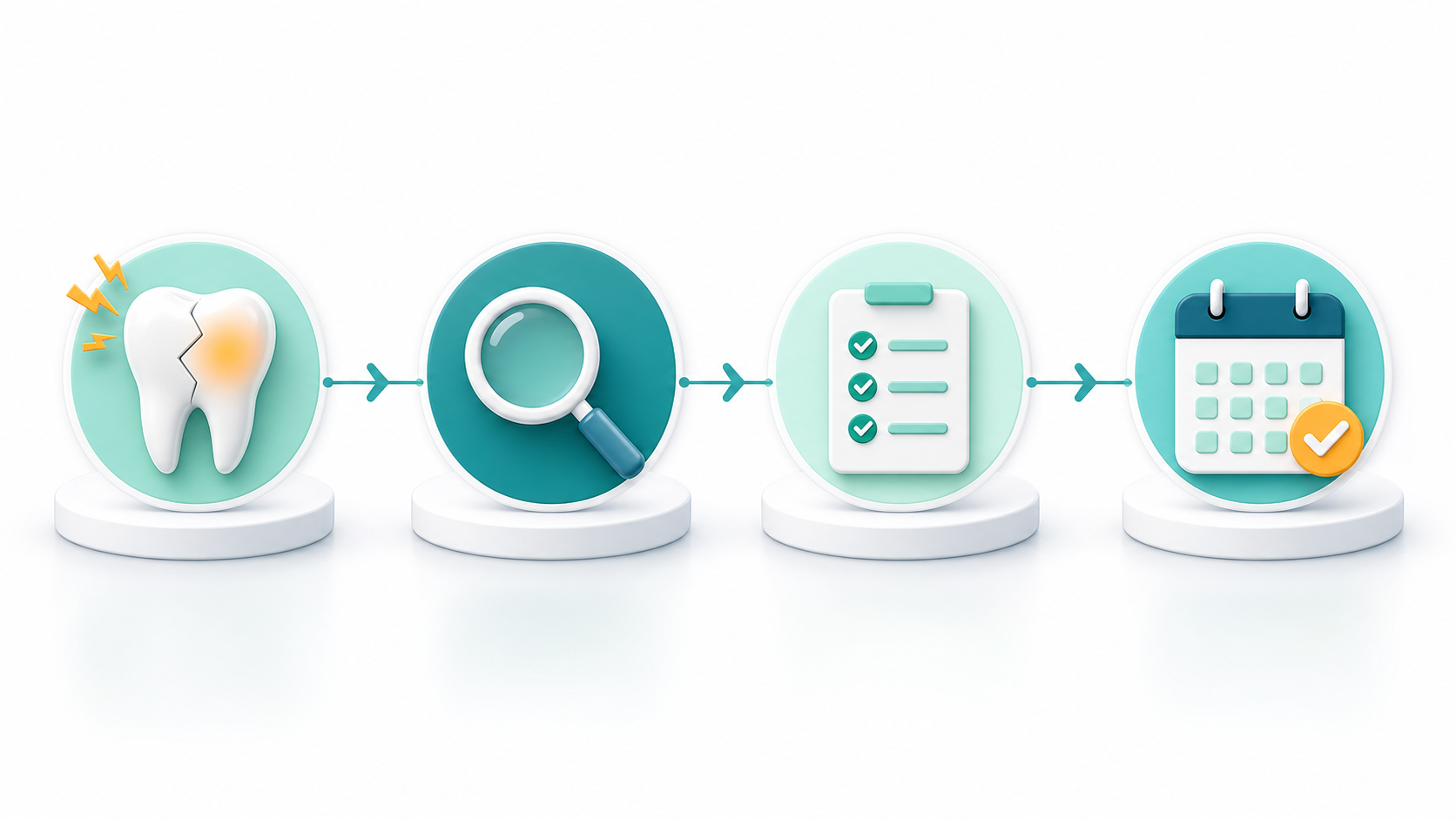
Not every search means the same thing. Someone searching "tooth pain will not go away" wants urgent-care information, not a landing page pitching cosmetic veneers. Clinics that map content to the actual stage of the patient journey - symptom research, treatment comparison, price-checking, and booking - usually see better engagement and conversion than clinics publishing one-size-fits-all pages.
Local trust
For a dentist, local visibility is the whole game. In 2026, local trust signals matter more than ever:
- Consistent, accurate business information across Google Business Profile, directories, and the website.
- A steady stream of recent, genuine patient reviews, not only a cluster from years ago.
- Location-specific content that reflects the actual neighborhood, not a template swapped city to city.
Search engines are increasingly good at detecting the difference between a clinic that is genuinely embedded in its community and one that is simply listed there.
The Role of AI Search
ChatGPT and search changes
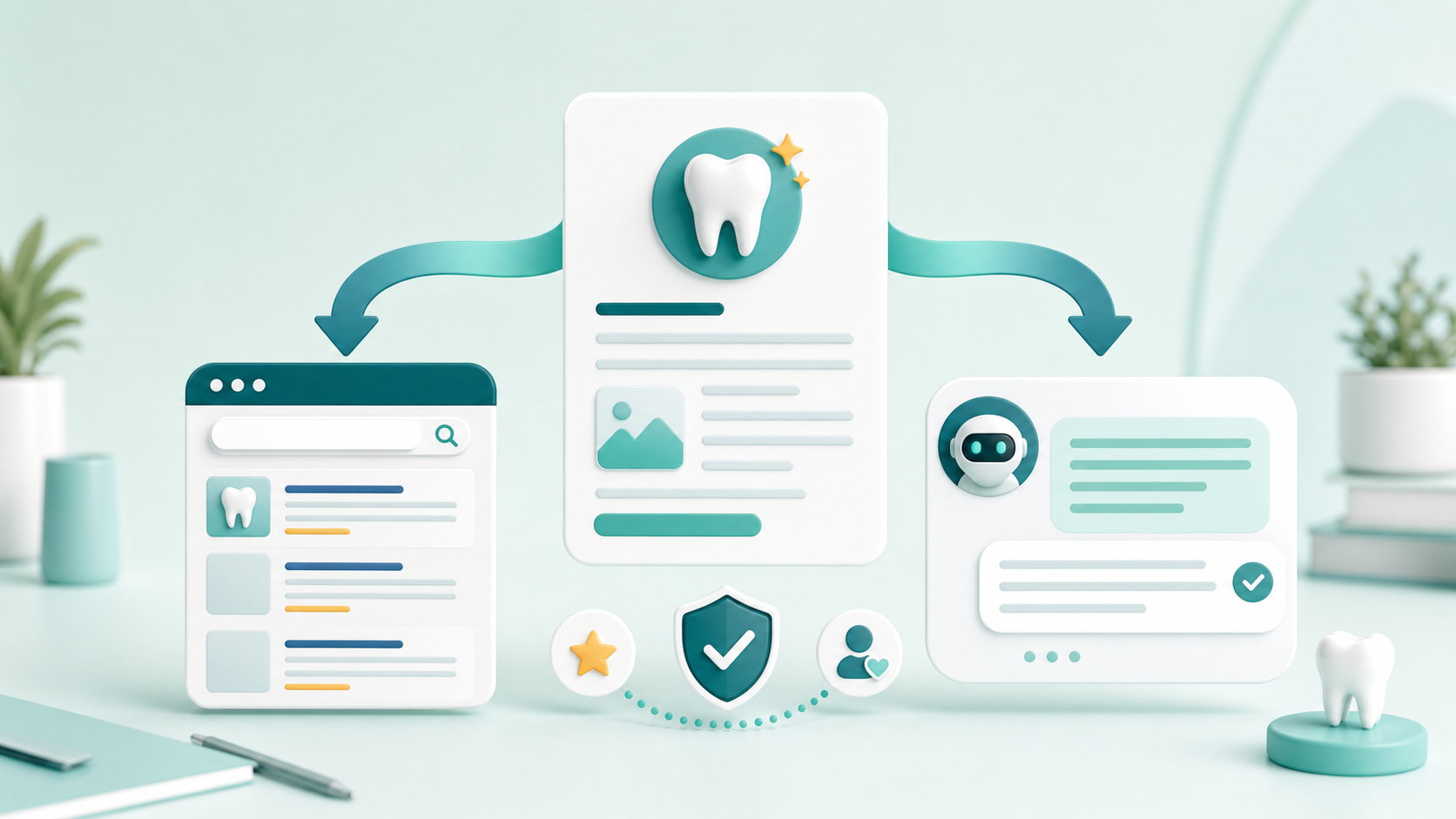
AI chat tools and AI-generated search summaries are increasingly the first stop for patient research. They answer questions directly instead of sending users to a list of websites. For clinics, this means two things:
- Being the source AI tools can understand matters. Clear, well-structured, factually accurate content is more likely to be referenced, summarized, or trusted.
- Clicks are becoming more valuable, not less. When a patient does click through from an AI-generated answer, they are often further along in their decision.
This does not mean traditional SEO is dead. It means content now has to work for two audiences at once: human readers and AI systems parsing for accurate, structured answers.
Practical SEO Priorities for Clinics
If resources are limited, focus on the areas that improve visibility and patient trust at the same time:
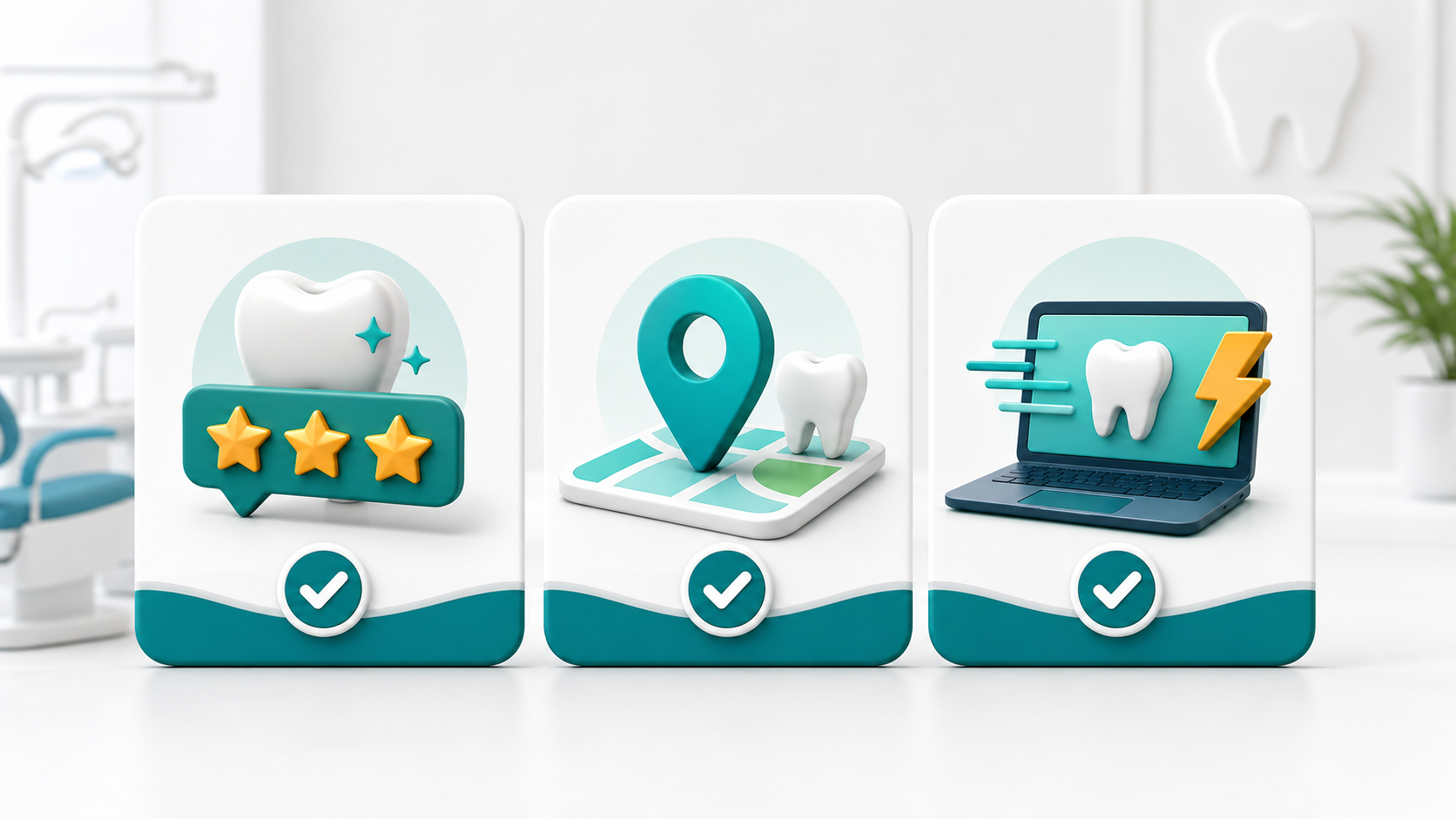
- Reviews. Make review generation part of the patient journey, not an afterthought. Recent, detailed, varied reviews are one of the strongest trust signals available.
- Local content. Write about your actual location: neighborhood pages, community involvement, and patient questions specific to your area.
- Fast websites. Page speed and mobile experience affect both rankings and whether a patient stays long enough to book.
Final Thoughts
Dental SEO in 2026 is not about outsmarting an algorithm. It is about becoming genuinely useful, genuinely local, and genuinely trustworthy in ways both patients and AI systems can recognize. Clinics that invest in helpful content, clear patient-intent mapping, strong local trust signals, and fast, well-built websites will keep winning, even as search keeps changing.
The clinics that treat SEO as an extension of patient care, rather than a technical checkbox, are the ones that will still be visible and booked well into the future.
Earth Craft Digital can help your clinic build an SEO strategy for 2026, from local content to AI-ready site structure.