
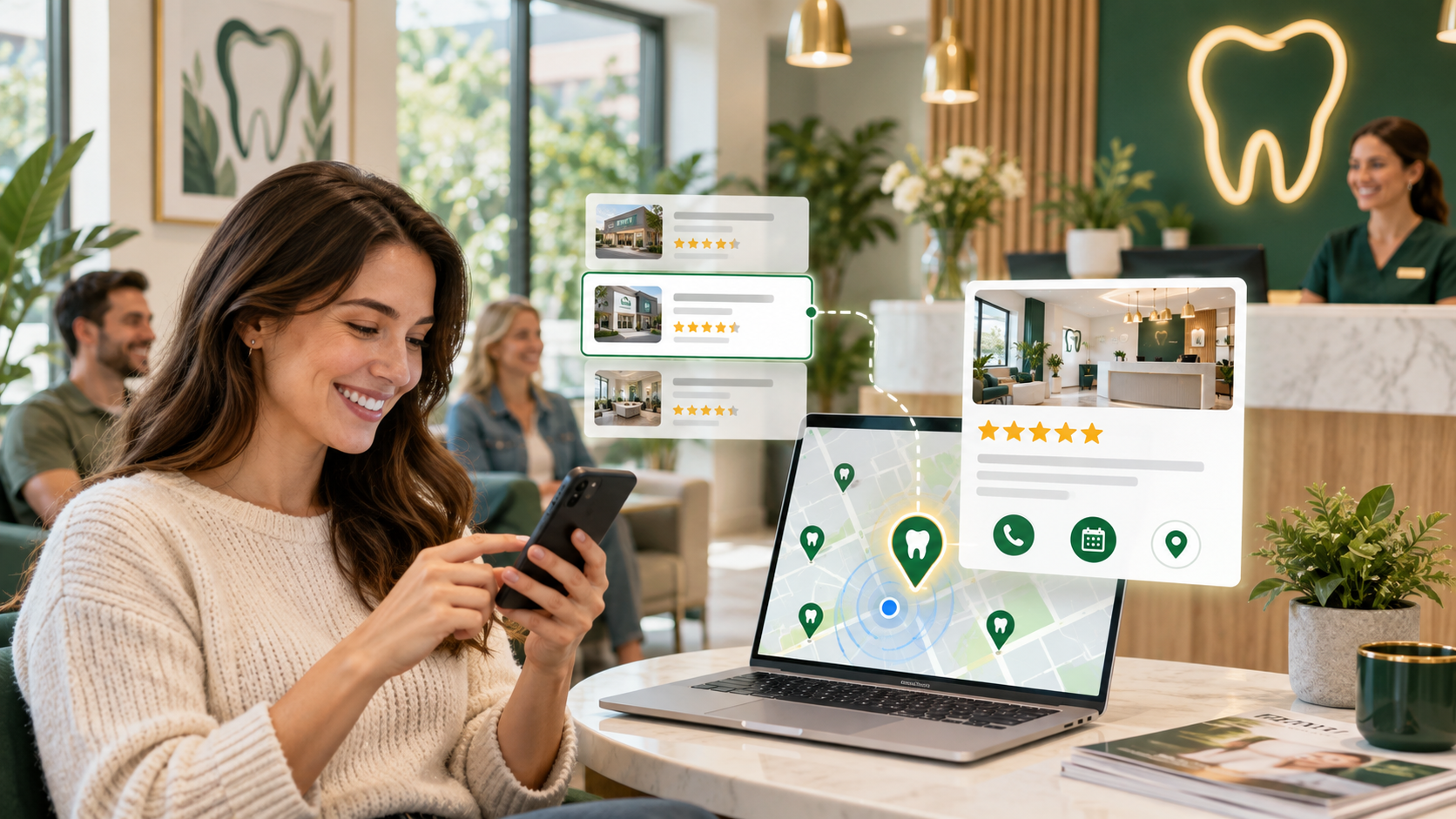
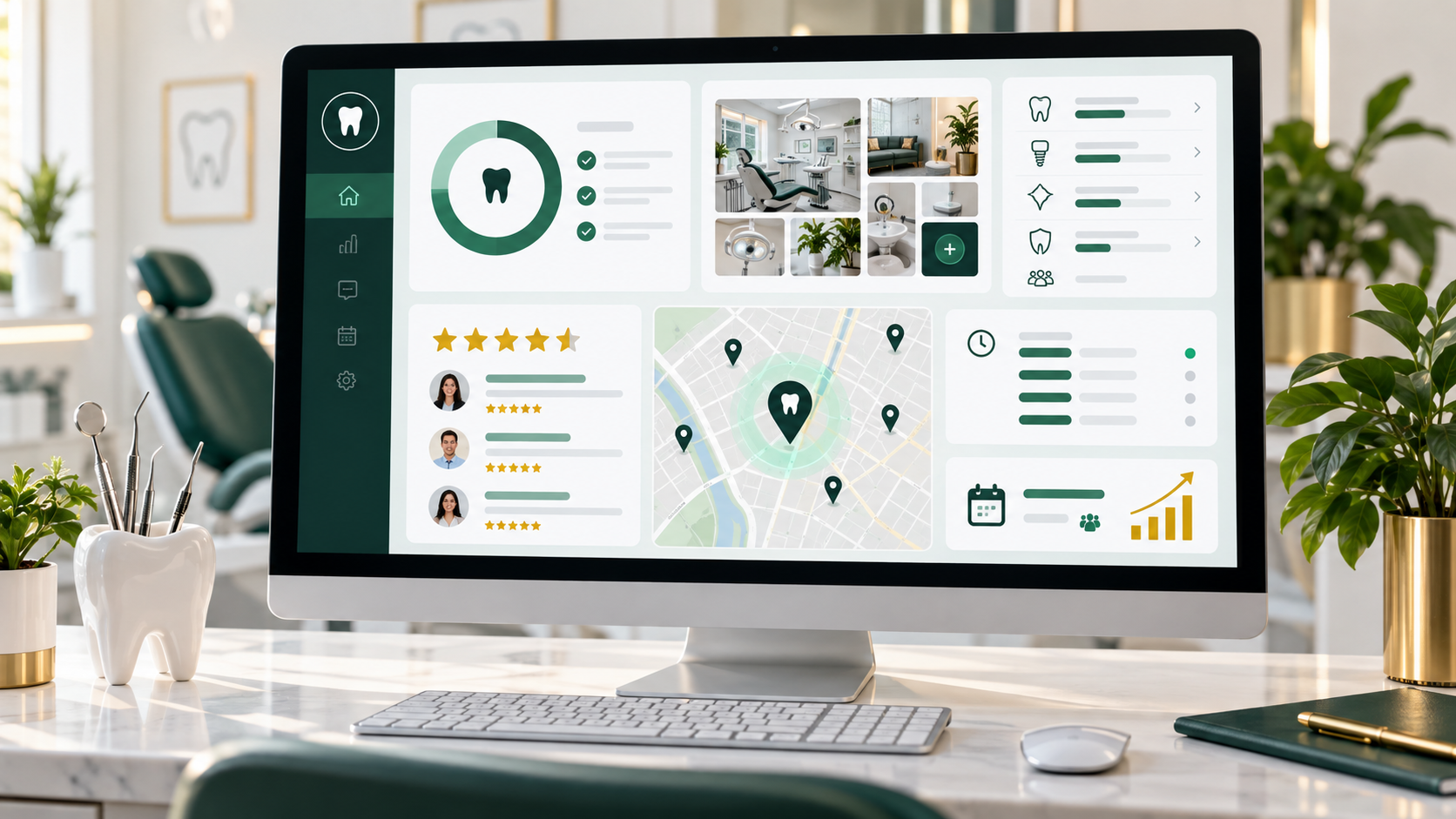
Local search visibility is not determined by location alone. Google says local results are primarily influenced by relevance, distance, and prominence. For dentists, that means local SEO is less about chasing one ranking and more about building a digital presence that is relevant, local, credible, useful, and easy to act on.
What Local SEO Means for Dentists
Local SEO is the process of making a dental practice easier to discover when people search for dental services in a specific geographic area. These searches might include "dentist near me," "emergency dentist in Chicago," "family dentist near me," "dental implants in [city]," or "cosmetic dentist [city]."
The important point is that these searches often have different intentions. Someone looking for an emergency dentist may want immediate availability. Someone researching dental implants may be comparing treatment options. Someone searching for a family dentist may be evaluating the location, services, reviews, comfort level, and overall fit.
Better question: instead of asking only, "How do we rank for dentist near me?", ask, "What information does a nearby patient need at each stage of their search?"
The Three Local Search Factors
Google identifies three major factors in local ranking: relevance, distance, and prominence. These factors work together, which is why simply being nearby does not guarantee strong visibility.
How well your practice matches the search. Google needs clear signals that you provide the treatment or service the patient is looking for.
How close your practice is to the person searching. Local results can change from one neighborhood to another.
How established and trusted the practice appears. Reviews, ratings, links, citations, and broader reputation can contribute.
Not a ranking factor by itself, but essential. Once patients find you, your profile and website must help them take the next step.
Google Business Profile
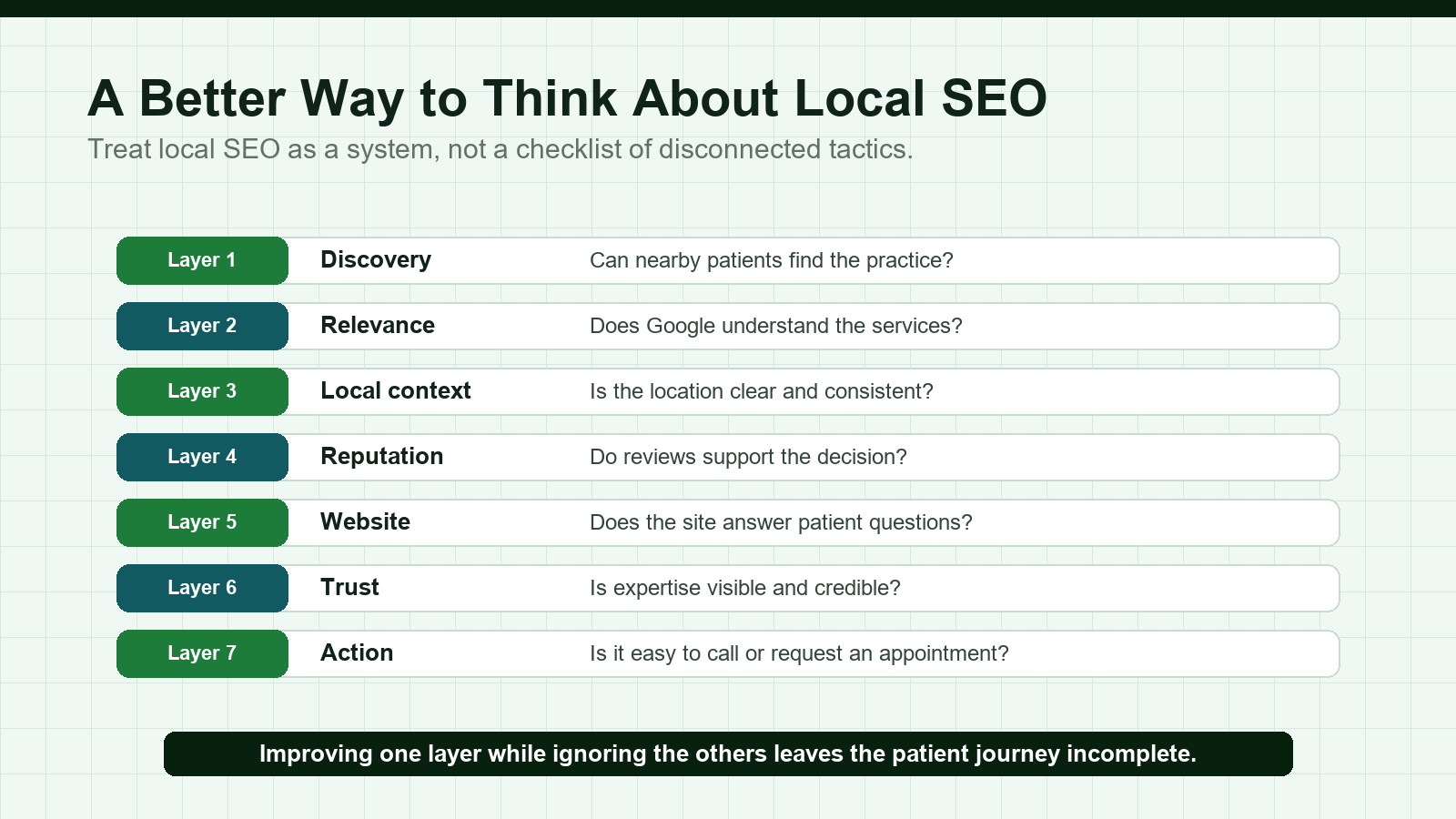
For most dental practices, the Google Business Profile should be one of the first places to review. Think of the profile as the first digital introduction between your practice and a potential patient.
Start with the basics: practice name, address, phone number, website, primary category, hours, services, photos, and appointment information. The address should accurately represent the real location where patients are served. Practices with multiple genuine locations should represent each eligible location appropriately.
A common mistake is treating the profile as a keyword container. Your business name should represent the actual business name, and your profile information should accurately describe the practice. The objective is clarity.
Reviews: More Than a Star Rating
Reviews are often discussed as if the only important number is the average rating. For patients, the reality is more nuanced. People read reviews to understand what an experience with a business might actually be like.
BrightLocal's 2025 Local Consumer Review Survey found that many consumers use Google to find reviews of local businesses and often consult more than one review site. For dental practices, review content matters because a patient may want to know whether the staff was welcoming, the dentist communicated clearly, the process was explained, scheduling was straightforward, or the practice handled an emergency well.
Reviews should be earned ethically and consistently. Do not offer rewards for positive reviews or pressure patients into saying specific things. A practical review process can include asking satisfied patients to share honest feedback, responding professionally, monitoring review platforms, and using patient feedback to improve operations.

Local Pages and Service Content
Many dental websites have service pages, but not all service pages are useful. A page titled "Dental Implants" that only says the clinic offers implants gives patients and search engines little to work with.
Useful service pages explain what the treatment is, who it may help, what the process usually involves, what patients should ask during a consultation, and how to book. Location pages should be equally careful. They should not be thin copies of the same content with a city name swapped in. They should explain real local relevance, service availability, travel context, and patient decision points.
This is also where educational blog content can help. Posts that answer common local questions, such as what to do during a dental emergency, what to expect from a root canal, or how to choose a family dentist, can support patient trust before the appointment.
Your Website Still Matters
A Google Business Profile may introduce the practice, but the website often decides whether a patient feels confident enough to book. A strong dental website should quickly communicate who you help, where you are located, what treatments you provide, why patients trust you, and how to schedule.
Important website improvements include clear service pages, visible phone and booking options, strong mobile performance, readable practitioner information, authentic photos where possible, testimonials or review highlights, and structured data where appropriate.
Technical SEO should also be handled carefully. Pages should be crawlable, indexable, internally linked, fast enough for mobile users, and free of misleading content patterns. Google Search Central emphasizes helpful, reliable, people-first content, which is especially important in health-related fields.
Common Local SEO Mistakes Dentists Make
- Using inconsistent practice information: mismatched names, addresses, phone numbers, and hours can confuse patients and weaken trust.
- Ignoring reviews until there is a problem: reputation should be managed consistently, not only after a negative review appears.
- Creating thin location pages: duplicate city pages rarely help patients and may create quality concerns.
- Publishing generic content: broad oral health tips are less useful than content that answers real local patient questions.
- Forgetting conversion: visibility matters, but patients still need clear reasons and easy paths to contact the practice.
Actionable Improvements for Dental Practices
Start by auditing how your practice appears from a patient's point of view. Search for your main services from nearby locations, compare your profile and website with visible competitors, review your service pages, read recent patient reviews, and check whether the website makes appointment action easy.
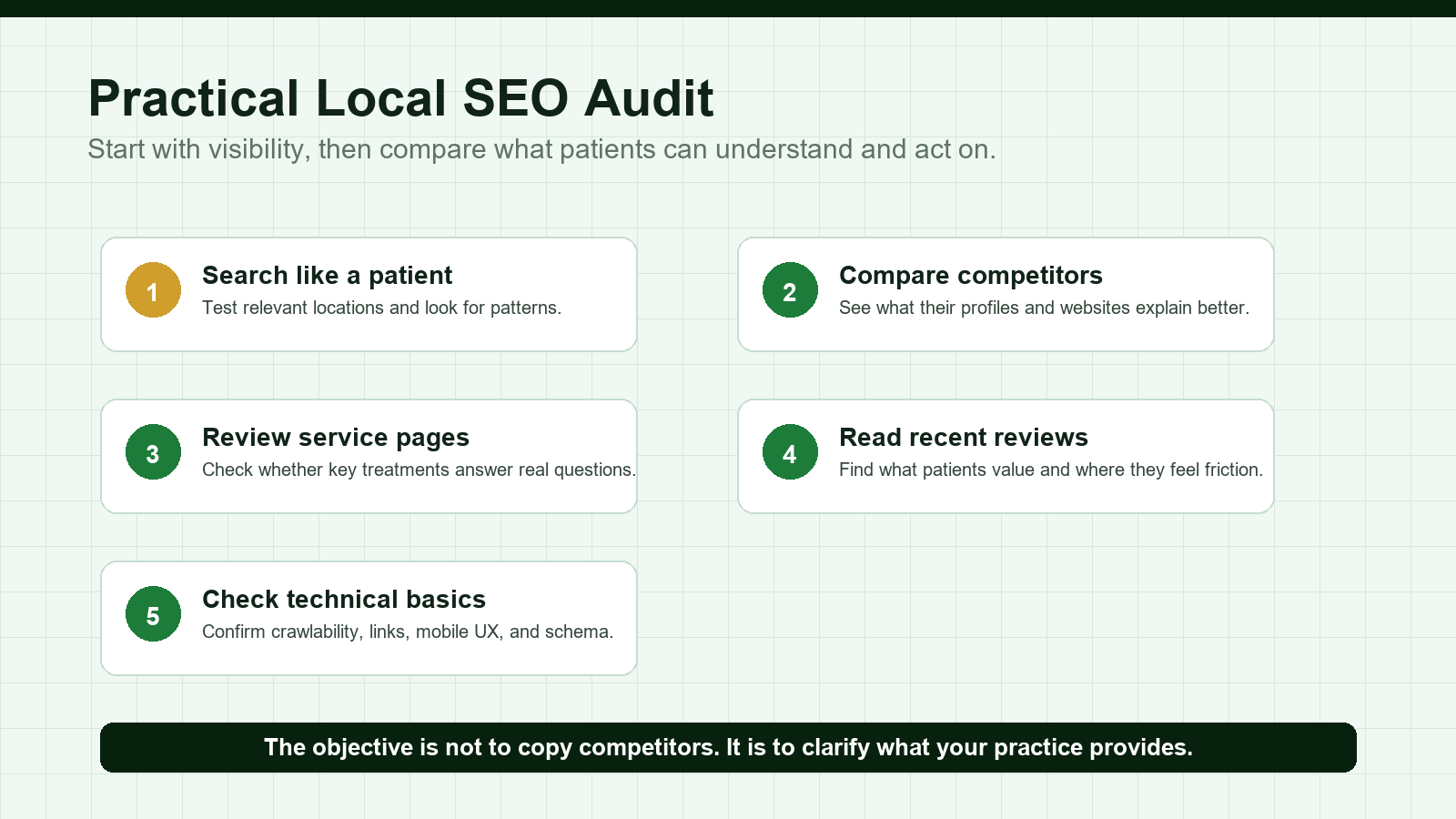
After the audit, prioritize the basics. Complete the Google Business Profile. Improve service pages. Build a steady review process. Add useful local content. Strengthen internal links. Make contact options unmistakable on mobile. Track performance through Google Search Console, Google Analytics, and profile insights.
Local SEO is not a one-time campaign. It is a practical system for making your clinic easier to understand, trust, and choose over time.
Suggested Internal Links
Frequently Asked Questions
How important is Google Business Profile for dentists?
For most dental practices, Google Business Profile is one of the most important local SEO assets because it helps Google and nearby patients understand the practice name, location, hours, services, photos, reviews, and appointment options.
How many reviews does a dental practice need?
There is no universal number. A practice should focus on earning steady, honest, recent reviews that describe real patient experiences. Quality, recency, and consistency are more useful than chasing a single review count.
Should a dentist create a page for every nearby city?
Only if each page is genuinely useful and accurate. Location pages should explain real service area relevance, patient needs, treatment options, trust signals, and appointment details rather than repeating thin content with different city names.
Does local SEO guarantee a number one ranking?
No. Local SEO cannot guarantee a number one ranking because results depend on relevance, distance, prominence, competition, search intent, and the searcher's location. The goal is to improve visibility, trust, and conversion over time.
Does AI change local SEO?
AI increases the value of clear, trustworthy, well-structured information. Dental practices should make services, locations, reviews, practitioner details, and appointment options easy for both people and search systems to understand.